He had solved the hard part. Nobody else could see it.
The inventor arrived with a utility patent, a page of concept sketches, and a working circulator that lived on his own countertop. The engineering was done. The market data was real. What he had no way to do was show any of it — every investor meeting ended the same way: come back when it looks more real.
So we started where every project starts, sitting down together to work out what the product actually does, who it is for, and what a room needs to believe before it writes a cheque. The patent figures were precise, but precision is not persuasion. The sketches showed intent. Neither one could carry a pitch on its own.
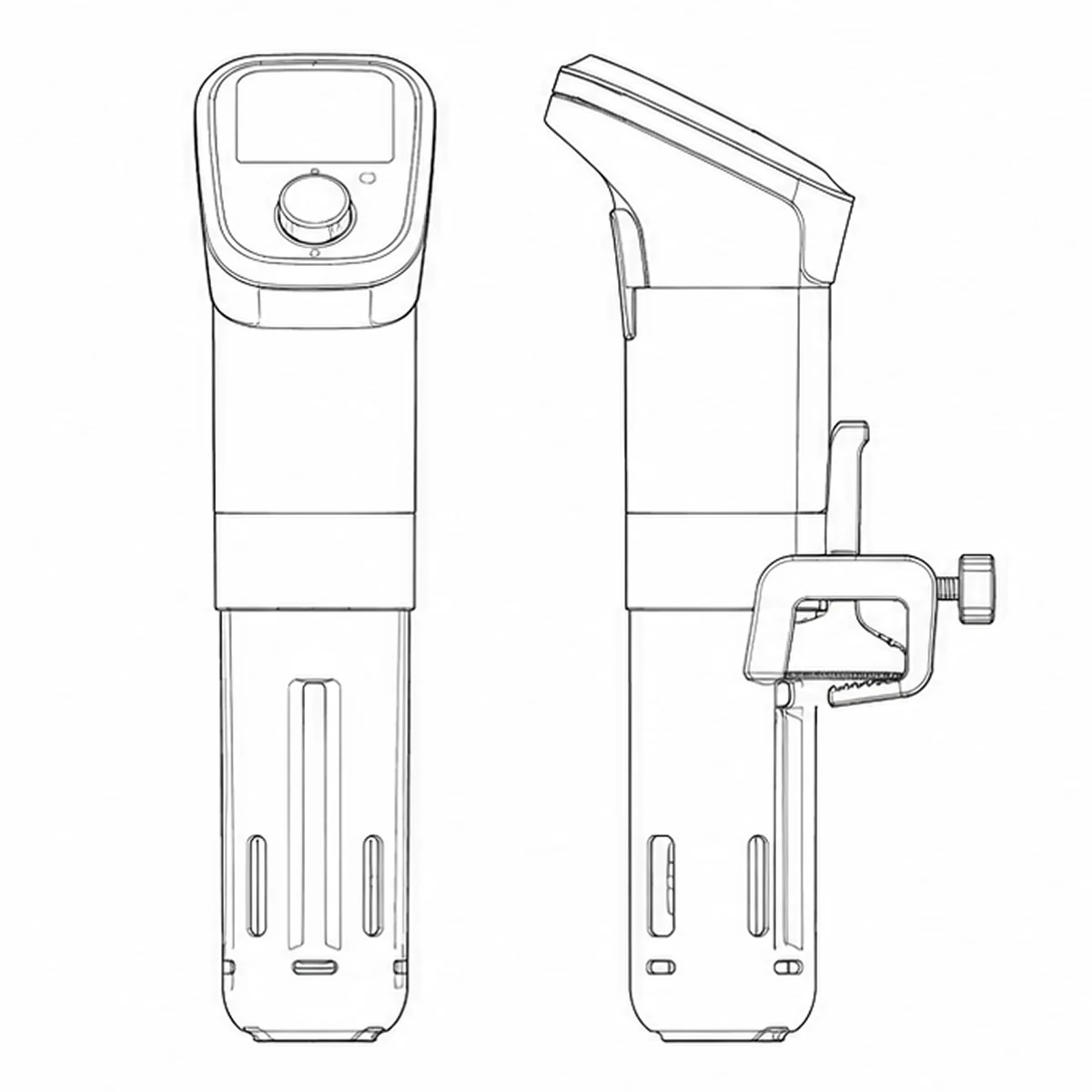
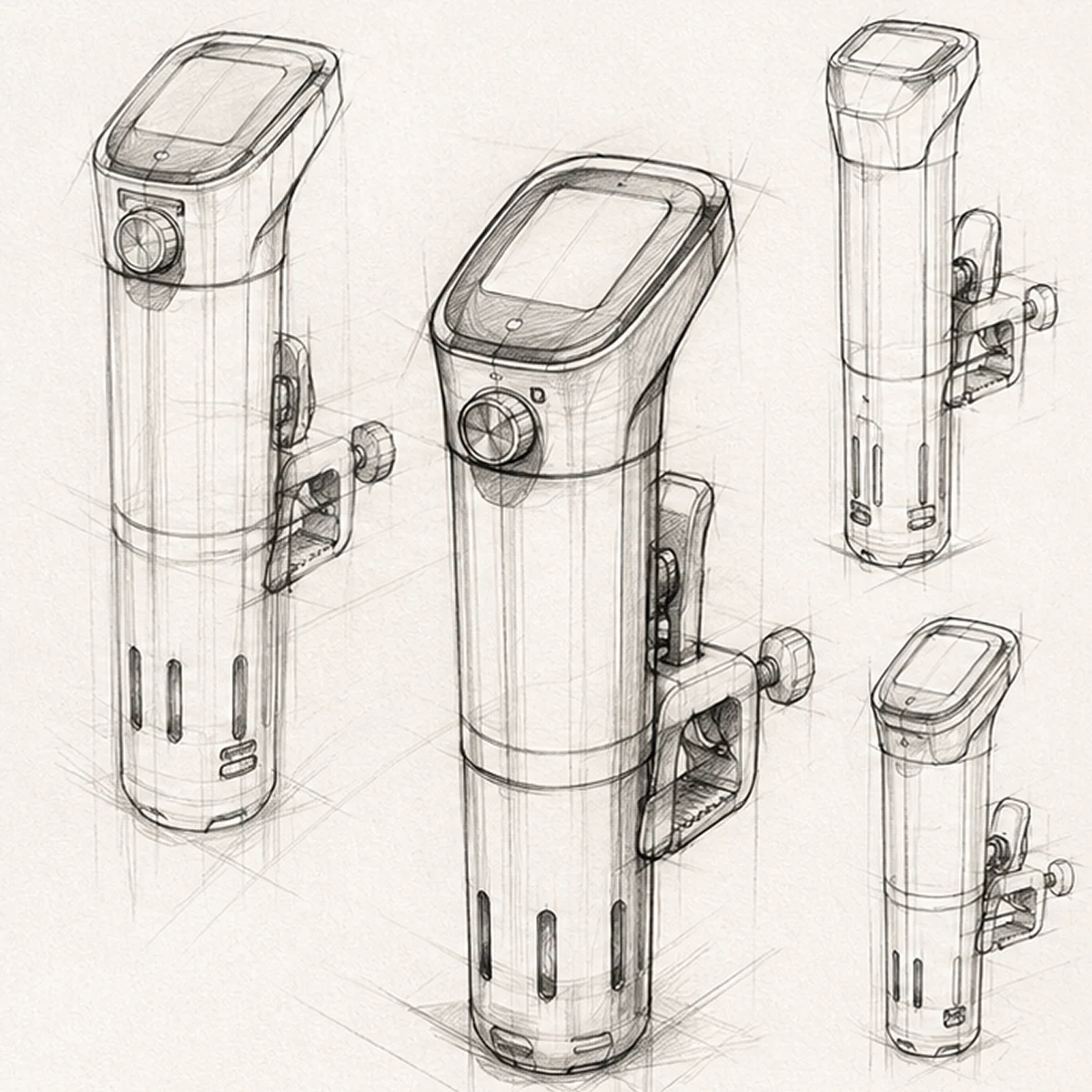
Left: the utility patent figures. Right: the concept sketches we worked from.
The first time anyone saw the product finished.
From the patent geometry and those sketches we modelled the product in 3D — every surface, every radius, every material. Matte black housing, brushed steel column, the display lit the way it would be on a real countertop.
This render is the pivot point of the whole project. Before it, the product was a description. After it, it is a thing you can point at. Every asset downstream — the deck, the website, the campaign — was built from this one model.
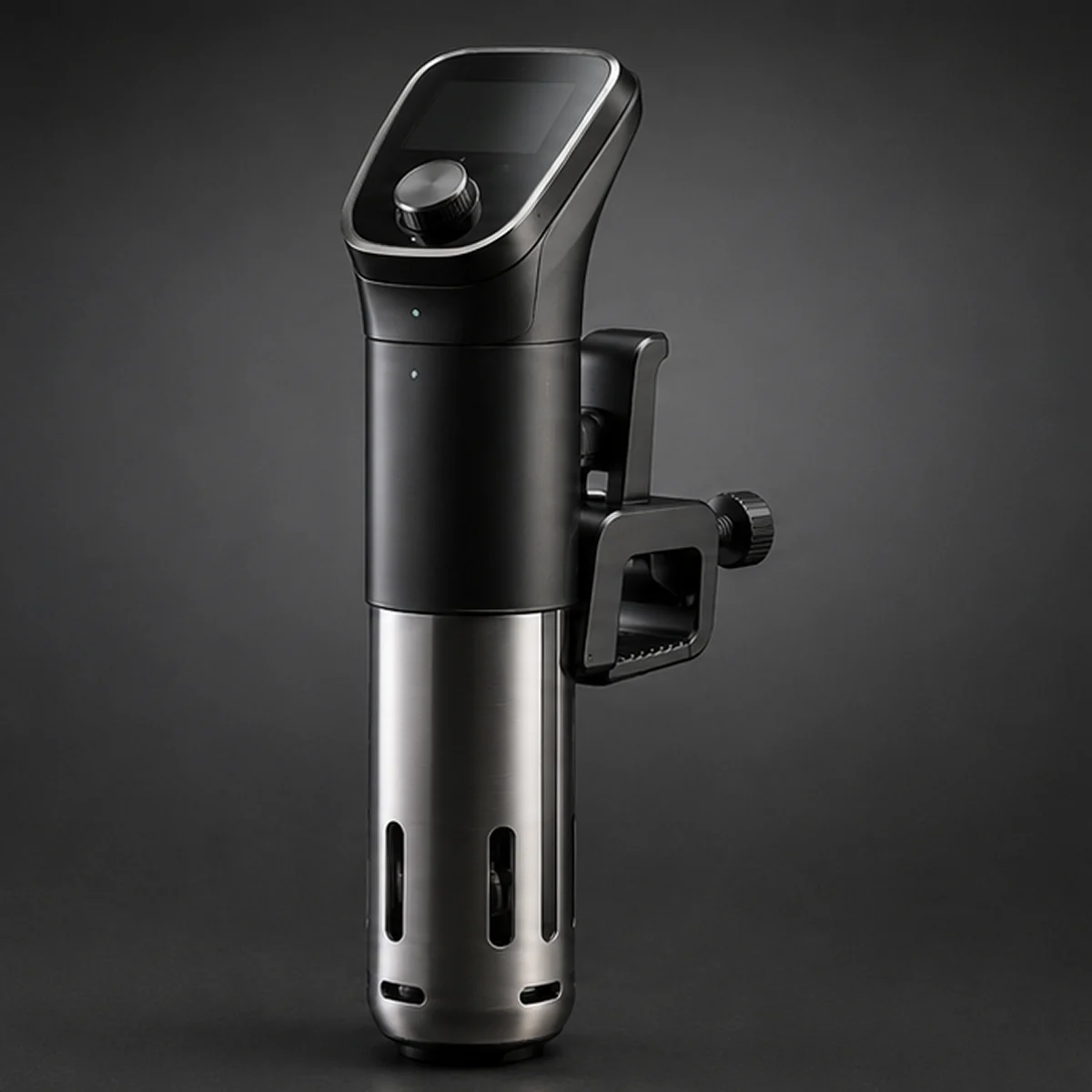
A render proves it can look good. Context proves someone wants it.
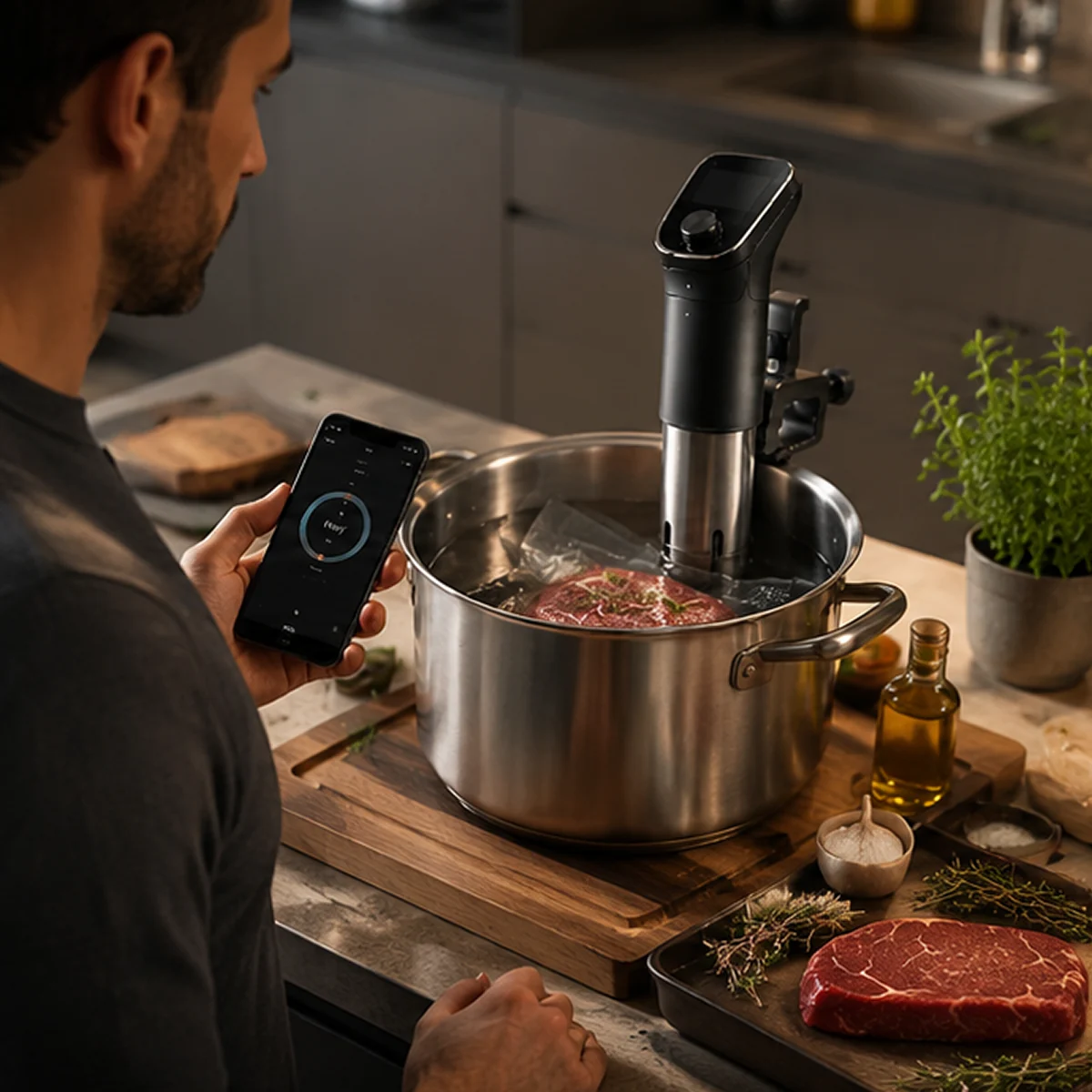
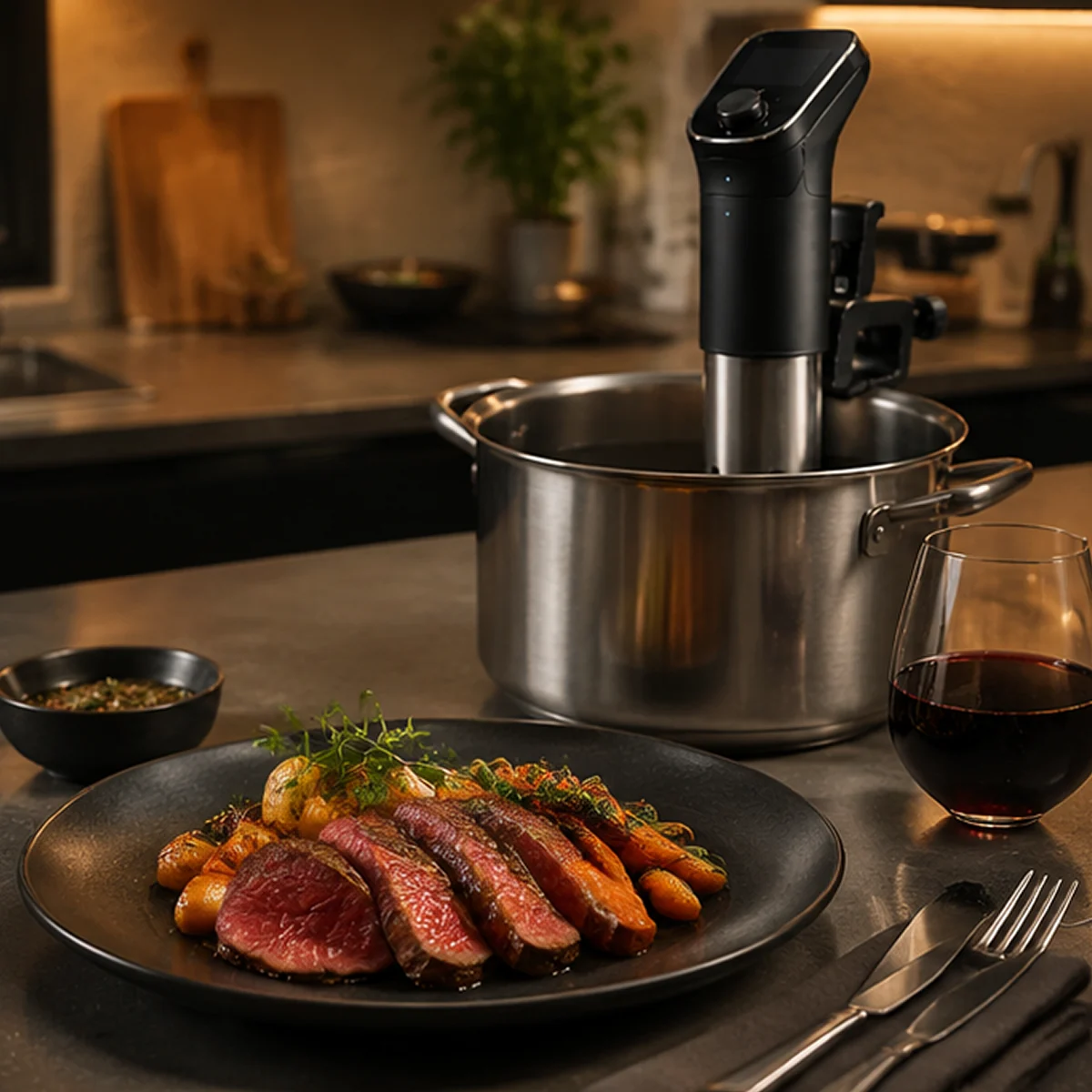
A product on a black background is a specification. The final stage puts it where it will actually live: in a working kitchen, in real hands, doing the thing it was built to do.
We covered the full range — the circulator at work, the app pairing that makes it smart, and the plated result the customer is really buying. These are the images that carry a pitch deck and a product page, and the reason an investor stops evaluating a concept and starts picturing a shelf.
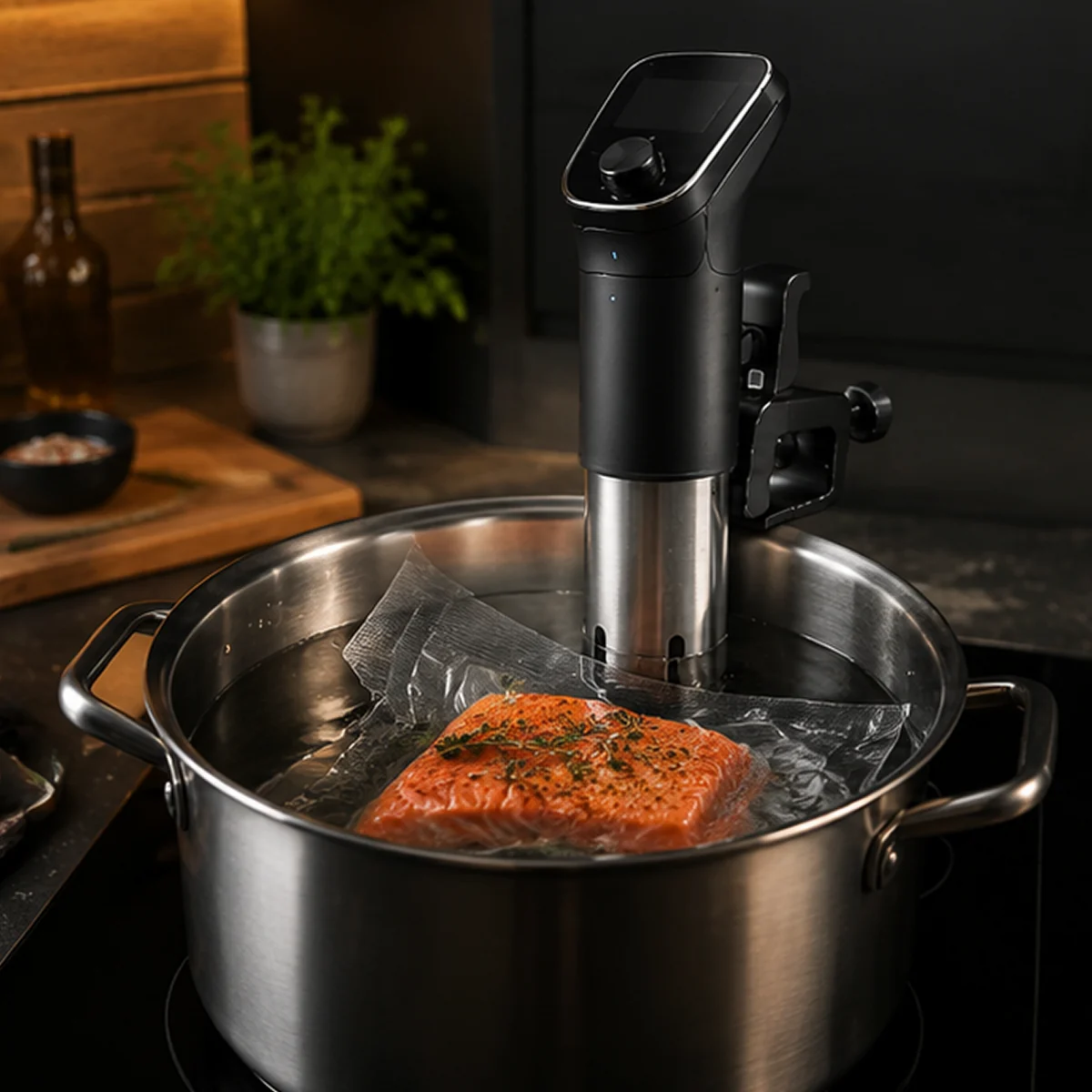
Funded. Eight months. One clean close.
"After three failed rounds, we had our first term sheet within 6 weeks of launching the new materials. InventorProStudio didn’t just make it look good — they made investors believe."— Marcus T., Founder & Inventor