Two audiences, and one deck trying to serve both.
The inventor came to us with a patent-pending foldable array, a working unit, and a problem that had nothing to do with engineering: retail buyers and licensing partners want completely different things. Buyers called it too complex to merchandise. Licensing leads went quiet after the first meeting.
We began by separating the two stories. Working from the patent drawings and his sketches, we mapped exactly what each decision-maker needed to see — and in what order — before a single surface was modelled.
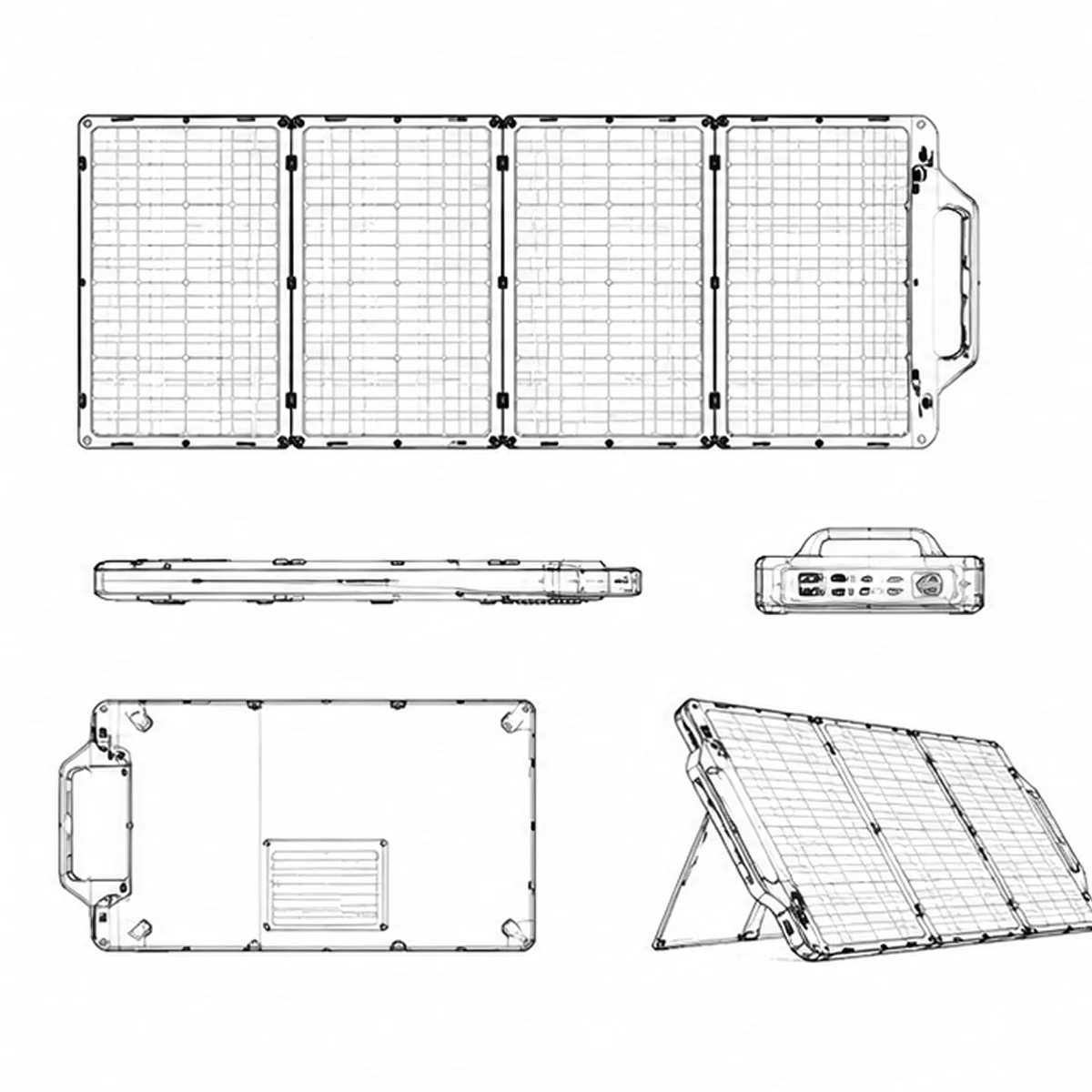
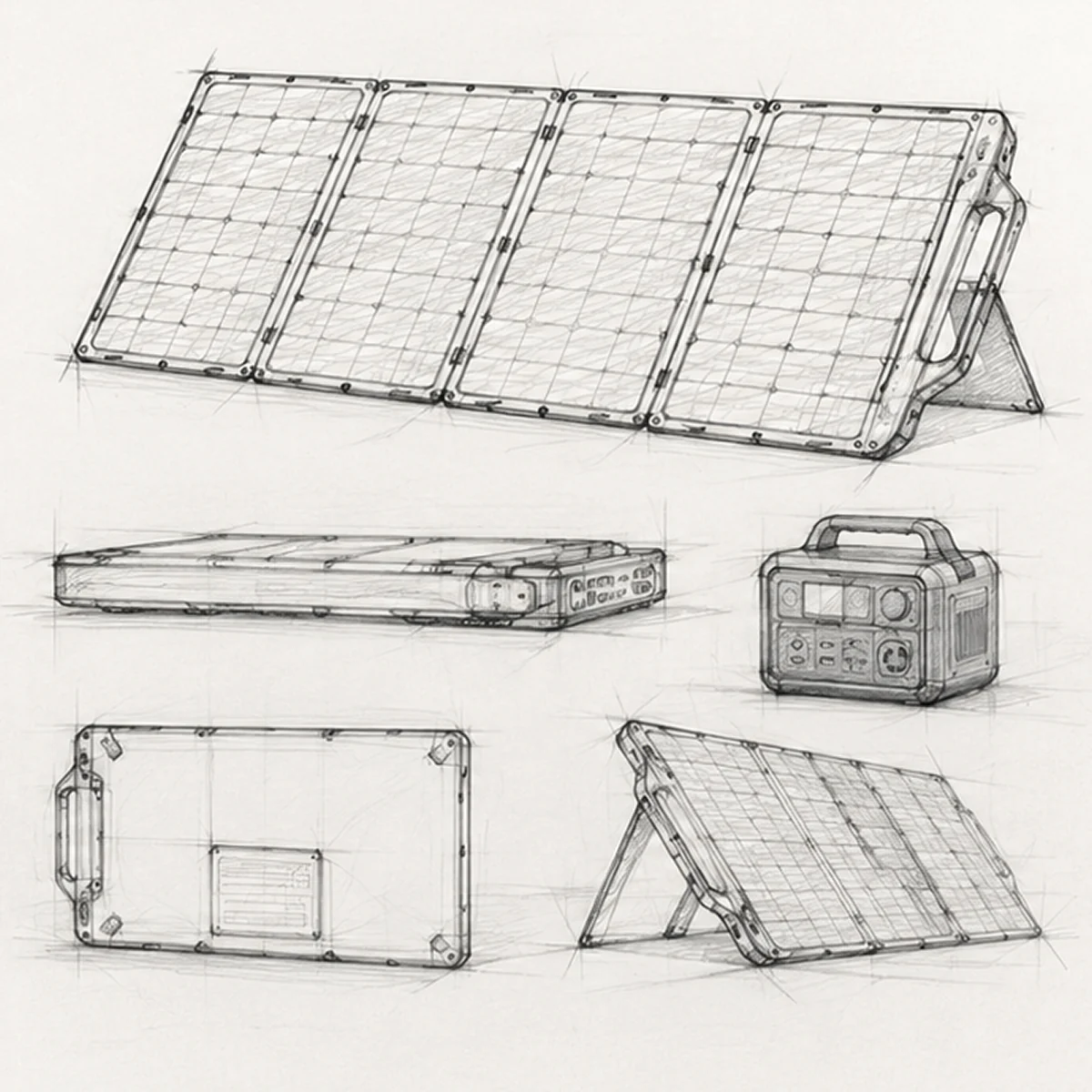
Left: the utility patent figures. Right: the concept sketches we worked from.
The panel and the power station, finally shown as one system.
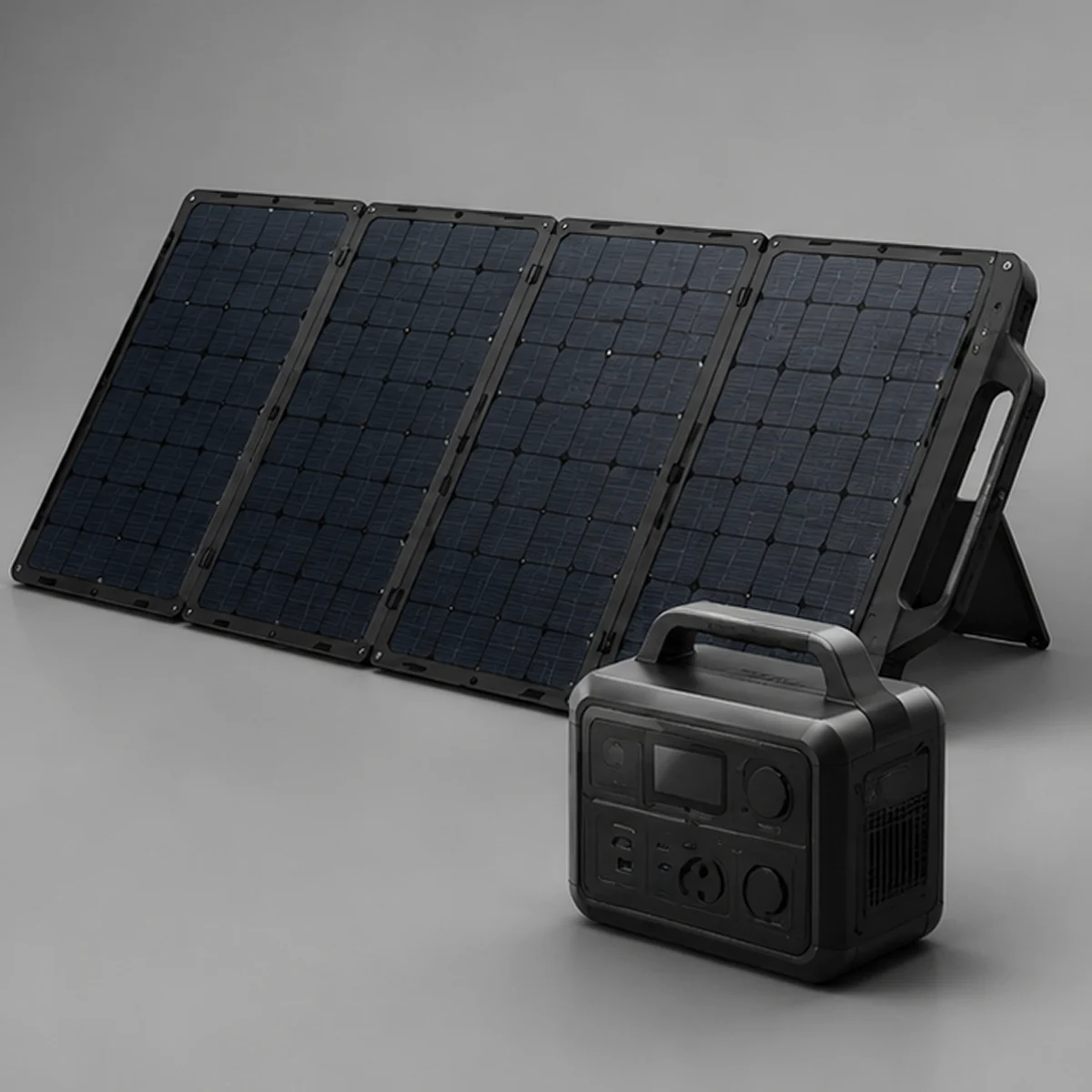
We modelled both halves of the product together — the folding array, the kickstand, the power station, and the way they connect. Phone photos of the prototype had never made the system legible as a single product.
That render became the backbone of both decks. The same asset, carrying two very different arguments: a merchandising story for retail, and a technical one for licensing.
Off-grid gear is bought on trust.
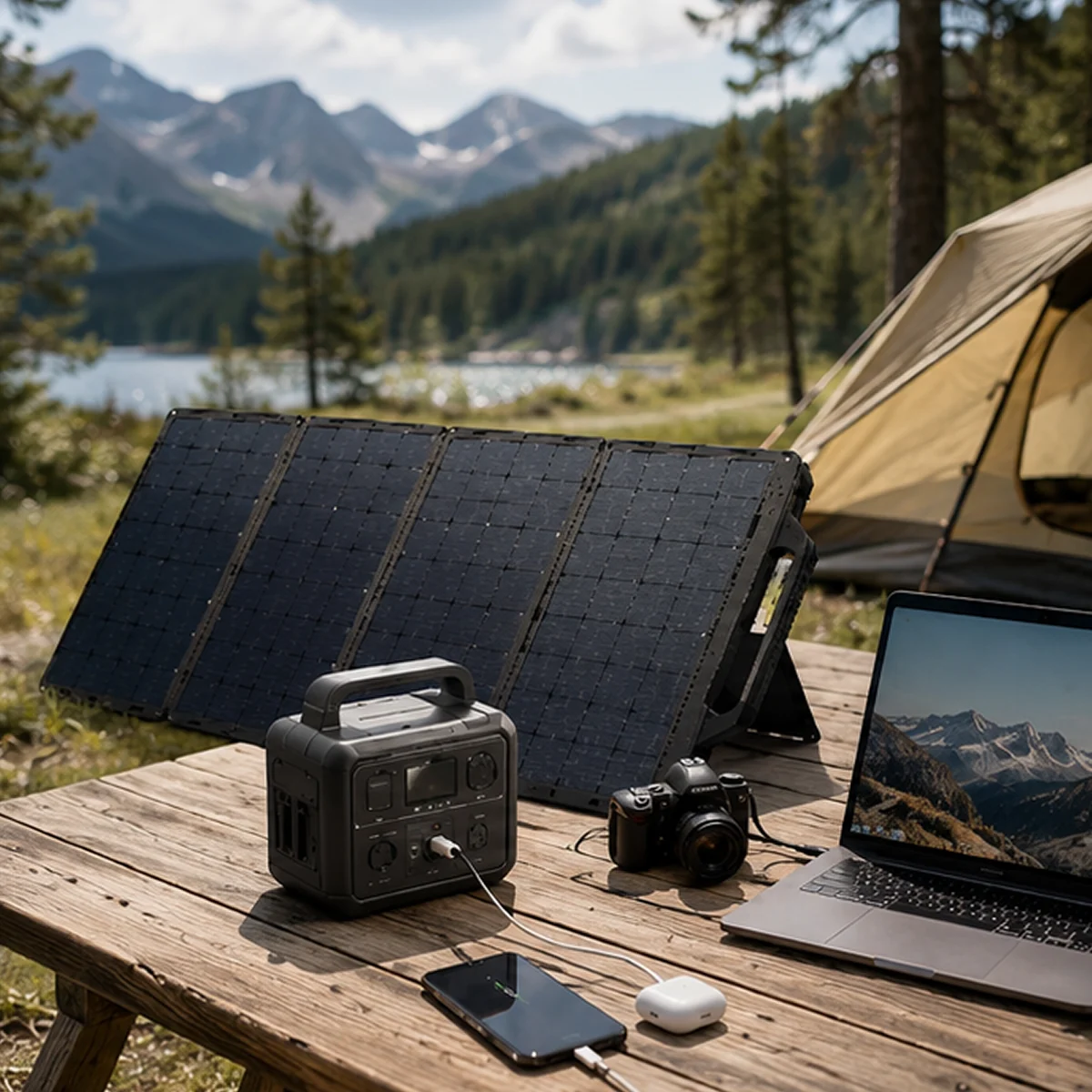
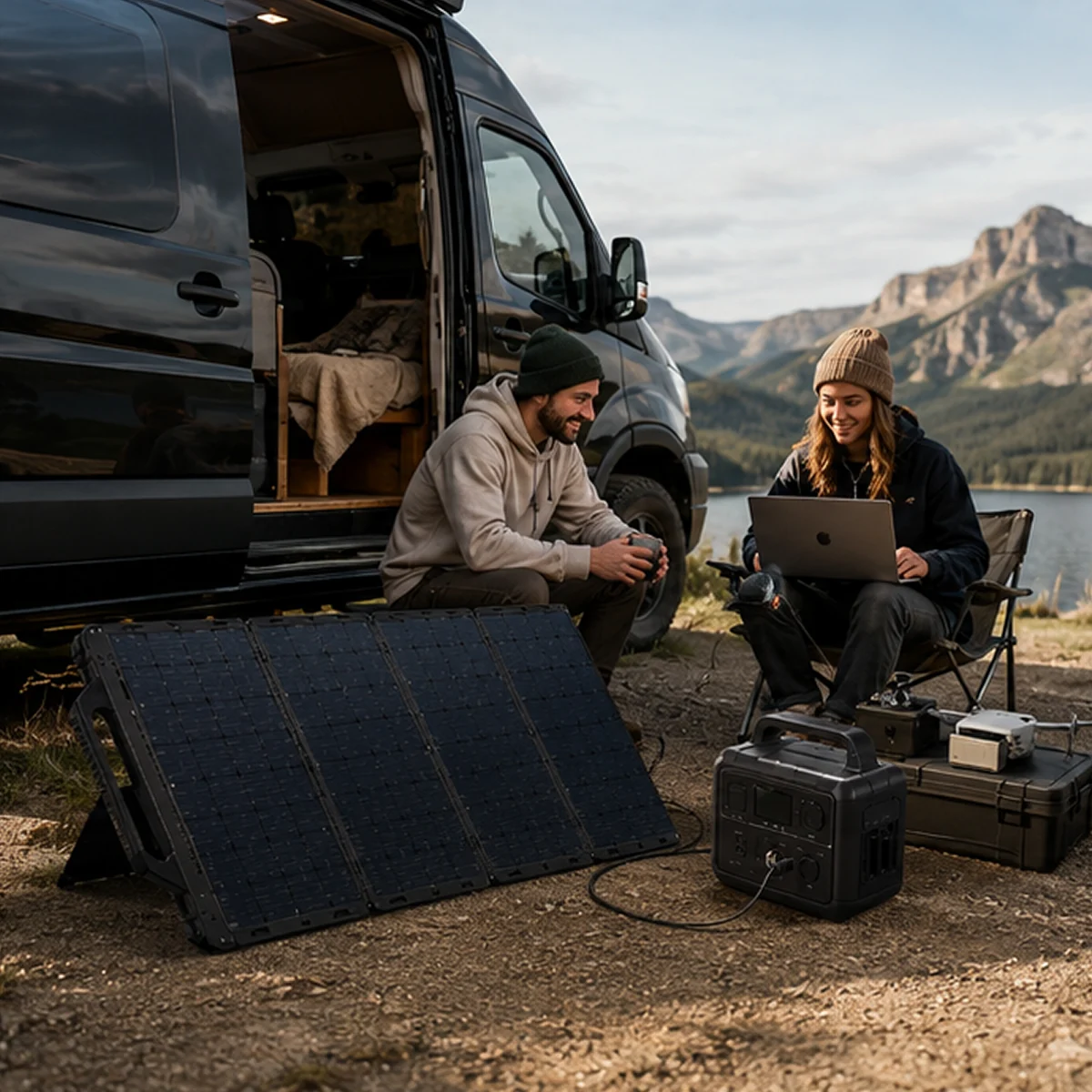
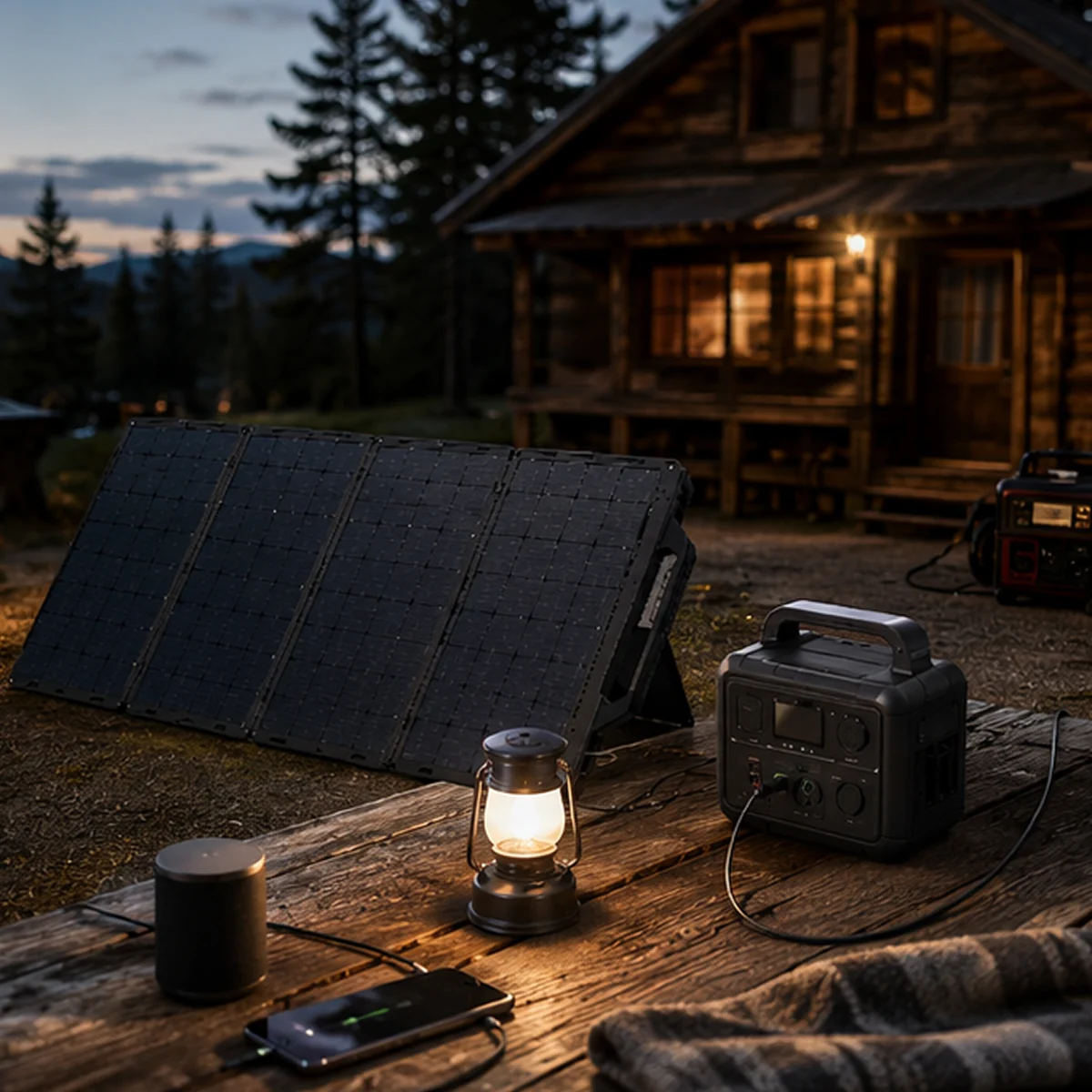
A studio render cannot establish trust for a product whose entire promise is that it works far away from a wall socket. So the final stage put it in the field — base camp, the van, the cabin at dusk.
These images did double duty. Retail buyers saw the lifestyle the product sells and where it sits on a shelf. Licensing partners saw an obvious, well-defined market. One visual system, two audiences, no compromise between them.
Licensed. On shelves. In 6 months.
"The two-deck approach changed everything. Retail buyers and licensing partners were finally seeing a story built for them instead of one deck trying to do both jobs."— David K., Inventor & Founder